Sea Animals: A Fun and Functional Dingbats Font for Creative Projects
There’s something oddly satisfying about opening a blank brand board and starting from scratch. I was recently working on a boutique identity project for a local handmade shop, and I needed a font that would feel playful yet professional. That’s when I stumbled upon Sea Animals, a dingbats font with an aquatic theme. At first glance, it looked like the kind of font you’d find in a craft store—colorful, whimsical, and just a little bit quirky. But after testing it in several design scenarios, I realized it had more to offer than I expected.
A Playful Typeface with a Purpose
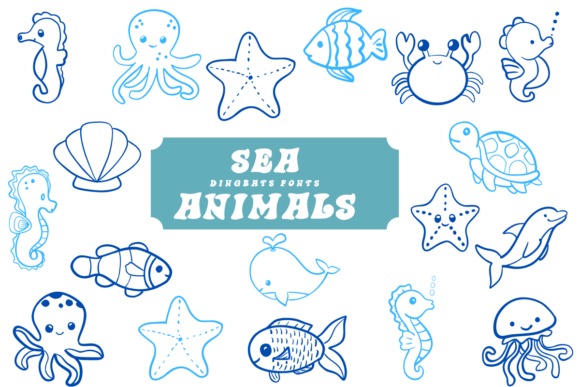
Sea Animals is a dingbats font, which means it’s not your typical text-based typeface. Instead, it features stylized symbols and characters inspired by marine life—fish, shells, whales, and more. The font is designed to be used as a decorative or accent element rather than for long body text. Its personality is immediately clear: fun, creative, and slightly whimsical. It’s the kind of font that feels like it belongs in a child’s coloring book or a DIY project, but it also has enough character to work in more refined branding contexts.
I tested Sea Animals on a logo concept for the boutique, using it as a supporting typeface alongside a clean sans serif font. The result was unexpected. The aquatic theme added a unique visual flair without overwhelming the design. It worked particularly well in areas where I wanted to highlight specific words or phrases, such as "Handmade" or "Local Craft." The font’s playful nature made the brand feel approachable and authentic, which was exactly what the client was looking for.
Testing in Real Design Scenarios
To get a better sense of how Sea Animals performed, I placed it in a few different design contexts. On a packaging mockup for a line of handmade soaps, the font added a subtle charm that complemented the product’s natural aesthetic. It wasn’t too busy, and it didn’t distract from the main text. I also used it on a social media layout for the boutique, where it helped create a cohesive visual language across multiple platforms.
One thing I noticed was how Sea Animals handled small sizes. When I scaled it down for a business card, the details started to blur slightly, which could be an issue for those relying on fine typography for readability. However, this isn’t a major drawback for a dingbats font—it’s meant to be used in ways that prioritize visual interest over legibility.
Another test involved using Sea Animals in a website header. While it worked well for the headline, I found that it wasn’t ideal for body text. The font lacks the necessary contrast and clarity for longer paragraphs, making it unsuitable for content-heavy websites. That said, it still holds up nicely as a display font, especially in areas where you want to draw attention or add a touch of personality.
Font Pairing and Stylistic Flexibility
When pairing Sea Animals with other fonts, I found that it works best with clean, modern typefaces. A simple sans serif or serif font can balance out its playful nature while maintaining professionalism. For example, I paired it with a minimalist sans serif font for a café visual refresh, and the combination felt fresh and inviting.
If you’re looking for a more elegant look, consider combining Sea Animals with a script or handwritten font. This creates a nice contrast between the structured and the organic, which can be effective for editorial design or creative studio identities. However, I wouldn’t recommend using it with overly ornate or complex fonts—too much detail can make the design feel cluttered.
Limitations and Considerations
While Sea Animals is a great choice for certain projects, it’s not without its limitations. As mentioned earlier, it’s not ideal for long body text or formal corporate use. The font’s style is more suited for short phrases, logos, headers, and decorative elements. If you’re designing a brand identity that requires a lot of text, you’ll need to use it sparingly or pair it with a more readable typeface.
Additionally, I recommend checking the commercial font licensing before using Sea Animals in client work. Some fonts have restrictions on how they can be used in print-on-demand products, templates, or digital assets. Always ensure you have the proper rights to use a font in your final deliverables.
Final Thoughts on Sea Animals
Overall, Sea Animals is a versatile dingbats font that brings a unique visual element to creative projects. Whether you’re designing a logo, packaging, or social media graphics, it can add a touch of personality and playfulness that stands out. While it may not be the best choice for every project, it’s definitely worth testing in a few different contexts to see if it fits your design vision.